
What actually happens after you call
Nobody is taught how a restoration runs until they need one. Here is the whole sequence, in order, with what you get at each stage.

The sequence
Six steps, one team
You should always know what is happening next, who is doing it, and what it costs. That is the whole reason we put the scope in writing before the work.
Start at step oneCome out and look, or talk it through
Nothing here costs you anything. We will come out and tell you what we find — and if the honest answer is that a small repair will do, that is what you will hear.
Your call
Tell us what happened and where. We ask the questions that change what happens next: is anything still running or burning, is there water standing, is the power off, has a claim been opened. Then we tell you what to do while you wait for us — and what not to do.
On-site inspection and documentation
We assess the damage room by room, take moisture readings, photograph everything, and record it in the form your insurance carrier needs. This happens before anything is moved, boxed or thrown away, because the record is what the claim is decided on.
Emergency work and stabilization
Board-up, roof tarping, water extraction, and the source shut down. Anything that is still getting worse is stopped first. If it is late at night, this is what happens tonight and the rest waits for morning.
Cleanup, drying and deodorizing
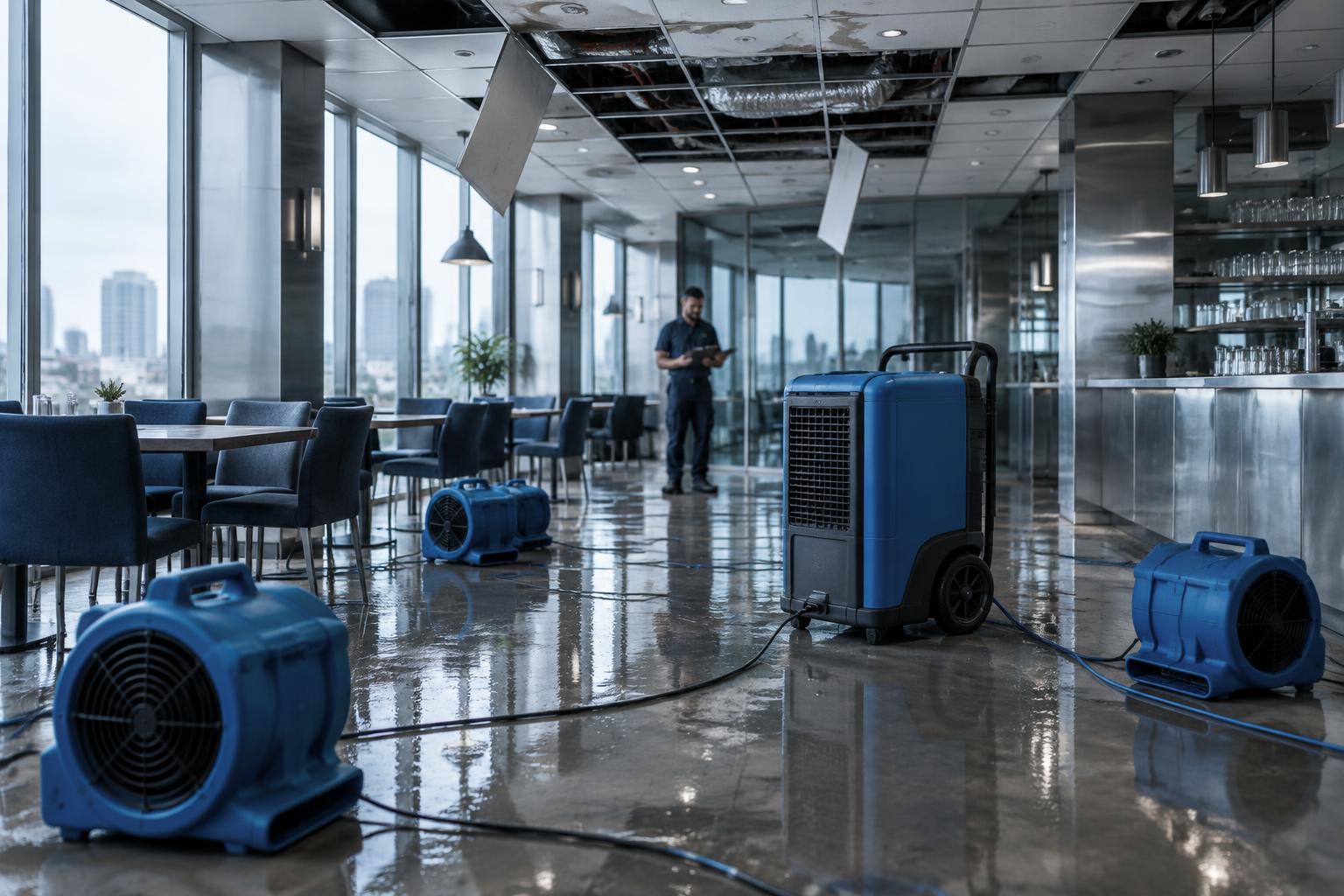
Soot and residue removed and neutralized, air movers and dehumidifiers set and monitored, contents packed out and cleaned. We log the readings and keep the equipment running until the structure is actually dry, not until it looks dry.
The scope, in writing
You receive an itemized scope of work — cleanup and rebuild priced separately, materials named, timeline set — and what it costs. Nothing chargeable begins until you have approved it in writing. Where insurance is involved, your adjuster gets the same document.
Reconstruction and the final walkthrough
We rebuild what was damaged, in sequence, with our own crews. Then we walk the finished property with you, show you what was done, and make anything right that is not — before we call the job finished.
The money part
How the claim and the cost work together
This is the part nobody explains clearly, so here it is plainly. Nothing here is advice about your specific policy — that is what your adjuster and your agent are for.
Your deductible is your share
For a covered claim, insurance typically pays the bulk of the work and you are responsible for your deductible. We will tell you what that number means for your job, in plain terms.
We bill the carrier for covered work
Where the carrier has agreed to the scope, we bill them directly for the covered portion rather than asking you to front it and wait to be reimbursed.
Supplements exist, and we file them
Initial scopes frequently miss damage that only appears once the walls are open or the ceiling is down. When that happens we document it and file a supplement rather than absorbing it silently or asking you to.
Your policy, your decisions
We can explain what we see in a scope of work, but we are not your insurance agent or a public adjuster. We will never tell you what your policy covers as though it were a fact.
During the work
What you can expect while we are in your property
- We protect what can be protected and contain the dust to the work area.
- You get a single point of contact rather than a different name each day.
- We tell you the moment we find something the scope did not account for, before we do anything about it.
- Equipment is loud, and drying takes days — we tell you how many, and when it will be collected.
- Nothing is discarded before it has been inventoried and photographed.
- We clean as we go, every day, rather than leaving it all to the end.
24-hour emergency response
A straight answer and a written scope.
We come out, document what we found, and put the work and the cost in writing — and we deal with your adjuster, so you are making decisions instead of relaying messages.
Ready to start at step one?
One call gets it moving, and we answer it around the clock. If it is not urgent, the form works just as well.